Okay, so check this out—I’ve been messing with browser wallets for years. Seriously. I used to juggle three different extensions and a spreadsheet of contract addresses. That part bugs me. But Rabby changed the playing field in ways I didn’t expect.
Short version: Rabby is tailored for multi‑chain DeFi users who want clearer UX and safer defaults. Wow. It doesn’t fix every problem. But for anyone tired of accidental approvals and hidden gas gouging, it’s worth a look.
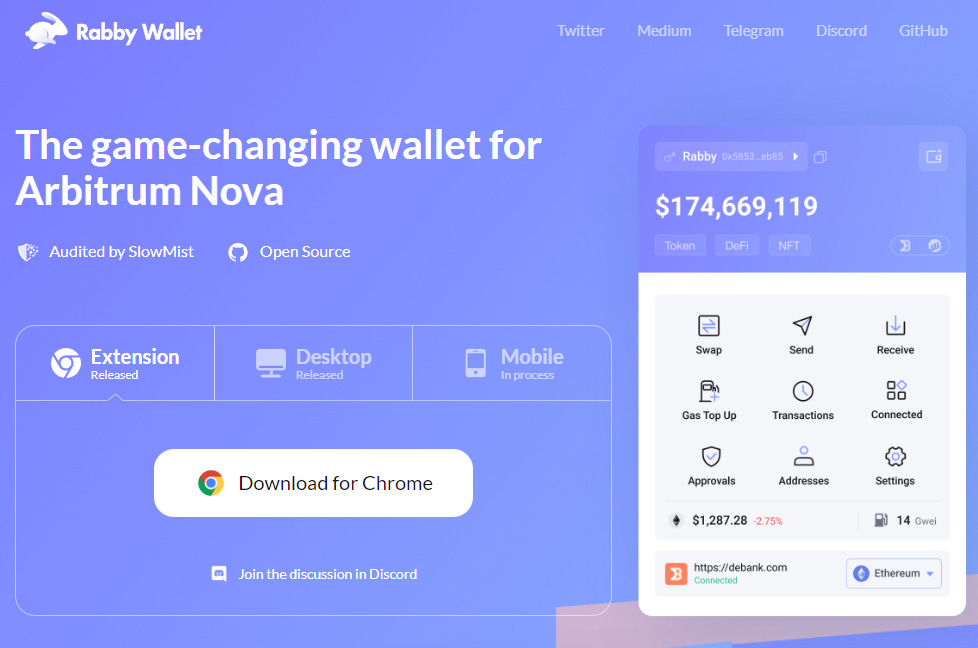
A quick, human take on what Rabby does differently
First impression: the interface is surprisingly practical. My instinct said “fine, another wallet”—and then I started clicking. The transaction confirmation flow surfaces important details up front: token allowances, recommended gas, the origin contract, and a clearer breakdown of slippage and fees. Hmm… that matters.
Rabby’s multi‑chain support is hands‑on. It supports Ethereum and many EVM chains, and it keeps the experience consistent across networks. On one hand, you get convenience; on the other, there’s the usual risk of chain‑specific quirks like different gas token behavior or bridge traps. Though actually, Rabby helps mitigate some of those risks with per‑tx previews and allowance controls.
I’ll be honest—I’m biased toward tools that reduce accidental losses. Rabby introduces features like allowance management (so you don’t approve a limitless spend by default) and a sandboxed transaction preview that flags risky calls. These are small UX decisions with big security impacts.
Security and privacy—practical, not academic
Rabby isn’t a hardware wallet. So if you’re using it as your primary key storage, remember the limits. Use a hardware signer for large holdings. That said, Rabby plays well with hardware keys (Ledger/Trezor), and the extension acts as a smooth middle layer. Initially I thought that would be clunky, but it actually integrates cleanly.
One practical advantage: the extension groups approvals by dApp and lets you revoke allowances without digging into Etherscan. That feature feels small, but trust me—it’s very very important when you’re interacting with new contracts or yield farms that rotate strategies.
Privacy-wise, Rabby follows the same extension model as others: account addresses and on‑chain activity are visible to any connected site. So don’t expect anonymity. If you need more privacy, use separate accounts for different activities. (Oh, and by the way, seed phrase hygiene still matters.)
UX details that actually help
Okay, here’s the nitty gritty: transaction simulation. Rabby simulates transactions and surfaces estimated outcomes and potential slippage or token changes. That saved me from a failed trade once—no joke. The simulation doesn’t magically fix all smart contract edge cases, but it reduces blind clicks.
Another thing: batch management of wallets and clear network switching. When you hop between testnets, L2s, and mainnets, Rabby keeps confusion down. There were a handful of UI rough spots—some labels could be clearer—and the app sometimes prompts too many confirmations for small ops. Still, those are UX tradeoffs I prefer over silent risky defaults.
Speed, compatibility, and dApp support
Rabby is lightweight and fast. It’s a browser extension, so it feels native to how I work. Compatibility with popular DeFi dApps is solid; most sites detect it as an injected provider just like MetaMask. However, some legacy dApps expect MetaMask-specific behaviors; in those few cases you might see odd messages or require a manual wallet connection.
On the other hand, Rabby includes features aimed at experienced users: customizable gas presets, transaction bundling, and a clearer breakdown of contract calls. If you’re comfortable reading calldata, those insights are gold. If not, the UI still lays out the essentials in a way that new users can grasp.
How I use Rabby in my routine
Personally, I use Rabby for day‑to‑day DeFi interactions and keep a hardware wallet for large, strategic holdings. My workflow: a hot wallet with limited funds (Rabby) for swaps and yield ops, and a cold wallet offline for treasury moves. Something felt off about relying on a single wallet before I adopted that split—my instinct said don’t put everything in one place. That saved me twice now.
If you’re trying Rabby, start small. Connect to one dApp, review the allowance flow, and practice revoking permissions. There’s a learning curve, but it’s manageable.
Where Rabby could improve
Not everything’s perfect. The extension could provide stronger guidance for newcomers—more handholding when it comes to allowances and why they matter. Also, some advanced analytics (on‑chain activity summaries, gas history) would be helpful. I’m not 100% sure about their roadmap, but I hope they prioritize clearer onboarding.
Battery of bugs? Not really. More like feature gaps that show where Rabby is focused: power users and safety‑minded folks. If you want one‑click trading without thinking, you might find some confirmations annoying. I do. But then again, I’d rather click twice than lose funds.
Want to try it?
If this sounds useful, grab the extension and poke around. I recommend downloading from an official source and verifying permissions. For a straightforward start, this link takes you to a trusted Rabby download and info page: https://sites.google.com/cryptowalletextensionus.com/rabby-wallet-download/
FAQ
Is Rabby safe to use for everyday DeFi?
It’s relatively safe compared to defaults—better allowance controls and transaction previews—but it’s still a hot wallet. Use it with limited funds and pair with a hardware signer for big moves.
Does Rabby support Ledger or Trezor?
Yes. It integrates with hardware wallets so you can sign transactions via your secure device while using Rabby’s interface for convenience.
Can I manage token approvals from the extension?
Yep. You can view and revoke approvals without going to Etherscan. That alone has saved me from nasty surprises a few times.
Leave a Reply